Becoming a bush pilot is one of the most respected pathways in aviation. While popular culture often frames bush flying as adventurous flying into wild landscapes, the reality is far more disciplined.
Bush piloting is not about chasing excitement or collecting flight hours in remote locations. It is about building a specific set of flying skills, judgement habits, and decision-making discipline that allow pilots to operate safely in environments where infrastructure is minimal and margins for error are small.
Remote strips rarely offer the safety systems found at major airports. There may be no runway lighting, no weather reporting, and no emergency support services. Surfaces can change with weather, terrain influences wind behaviour, and aircraft performance must be managed carefully.
Because of this, bush flying places strong emphasis on precision, planning, and conservative decision-making.
The pilots who succeed in bush environments are rarely the most aggressive or daring. They are usually the most methodical, the most disciplined, and the most willing to abandon a landing when conditions don’t align.
This guide explains the real pathway to becoming a bush pilot, from developing strong flying fundamentals to training in real bush environments under professional supervision.
One of the most misunderstood aspects of bush flying is the belief that it requires a specific licence or certification.
In reality, there is no formal bush pilot licence.
A bush pilot is not defined by paperwork, job titles, or a regulatory endorsement. Instead, bush piloting is a skillset developed through training, experience, and judgement.
Civil aviation authorities such as the Civil Aviation Safety Authority (CASA) in Australia regulate pilot licences and aircraft operations, but they do not issue a certification called “bush pilot.”
Instead, bush flying competence is recognised informally within aviation through a pilot’s demonstrated ability to safely operate in environments with limited margins.
These environments often include:
The absence of infrastructure changes the entire flying environment. Instead of relying on airport systems, bush pilots must interpret terrain, weather, and surface conditions themselves.
More importantly, bush flying requires a mindset built around conservative decision-making.
Pilots who last in bush environments are rarely the ones who push limits. They are the ones who consistently choose not to land when conditions do not stack up.
A bush pilot is a pilot trained to operate aircraft in remote or undeveloped environments where airport infrastructure is limited or absent. Bush pilots frequently land on short or unimproved airstrips and must rely on precise aircraft control, terrain awareness, and conservative decision-making to operate safely.
Every bush pilot begins with the same foundation: strong basic flying skills.
Before operating in remote environments becomes possible, pilots must demonstrate precise control of the aircraft in all phases of flight.
In bush flying, small errors do not remain small.
They compound quickly.
A minor speed deviation during approach may be manageable on a long paved runway. On a short bush strip, the same error can lead to a long landing or unstable touchdown.
Strong fundamentals therefore, include:
Precise Airspeed Control
Maintaining exact approach speeds is essential for short-field operations. Excess speed leads to float and increased landing distance.
Accurate Control Coordination
Bush pilots must maintain disciplined stick and rudder coordination to keep the aircraft aligned with narrow landing areas.
Stable Approaches
Approaches should be stable early rather than corrected late. Attempting aggressive corrections close to the ground introduces unnecessary risk.
Energy Management
Energy management refers to controlling the aircraft’s speed, altitude, and power to arrive at the landing area in a controlled state.
Bush flying is fundamentally about energy control.
Too much energy results in overshooting the landing point. Too little energy can create unstable approaches.
Pilots who develop strong fundamentals early are far better prepared for bush flying later in their progression.
Tailwheel aircraft dominate bush flying for several important reasons.
Unlike nosewheel aircraft, tailwheel aeroplanes place the small wheel at the rear of the aircraft. This configuration changes how the aircraft behaves during taxi, takeoff, and landing.
Tailwheel aircraft require stronger rudder coordination and improved directional awareness, which is why they are often used as a training platform for developing advanced handling skills.
Why Tailwheel Aircraft Are Common in Bush Flying
Tailwheel aircraft offer several operational advantages in bush environments.
These include:
More importantly, tailwheel aircraft provide clear feedback to pilots when the technique is incorrect.
For example:
This feedback accelerates learning.
While tailwheel flying can feel demanding initially, it is widely regarded as one of the best ways to improve a pilot’s stick-and-rudder skills.
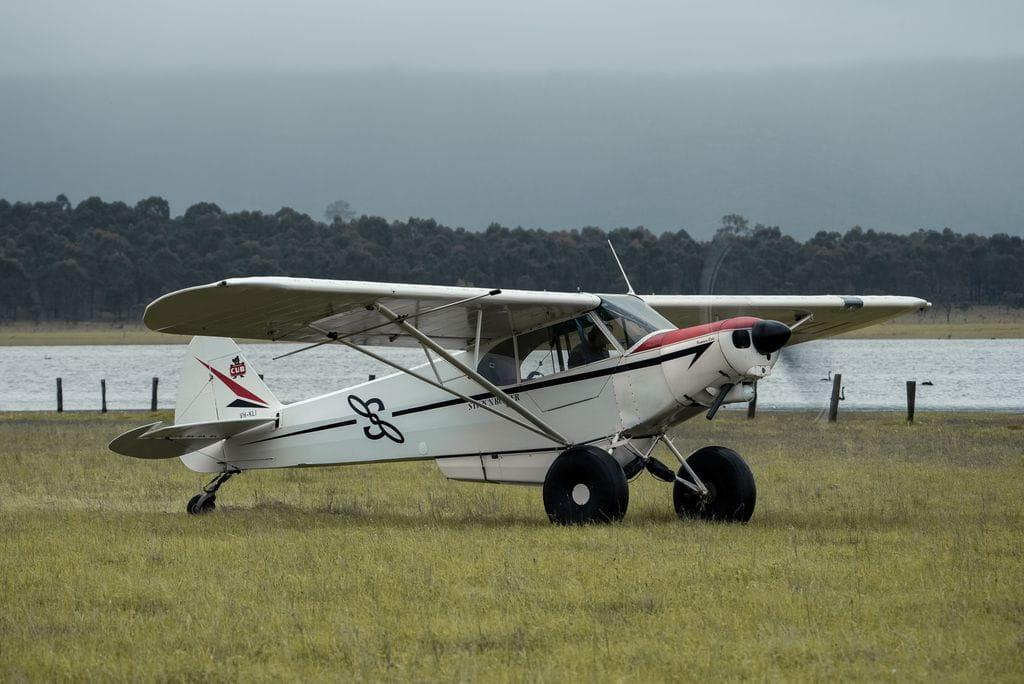
Many aircraft commonly used in bush flying such as the Piper Super Cub or Aviat Husky use tailwheel landing gear.
Because of this, tailwheel endorsement training is often the first practical step toward becoming a bush pilot.
Short-field and soft-field operations are core skills in bush flying.
These techniques allow aircraft to operate safely from landing areas that would otherwise be unsuitable for standard procedures.
Short-Field Operations
Short-field flying focuses on minimising the runway distance required for takeoff and landing.
Key skills include:
Bush pilots often aim to land within a very specific touchdown zone rather than using the entire runway.
Soft-Field Operations
Soft-field techniques are used on surfaces such as:
Soft surfaces create additional challenges.
Aircraft wheels can sink into the ground, increasing drag and potentially causing nose-over incidents if weight transfer is not managed carefully.
Soft-field flying therefore focuses on:
Both short-field and soft-field techniques are essential components of bush pilot training.
Bush pilots must develop a deeper understanding of environmental conditions than pilots operating solely from major airports.
Terrain significantly affects wind behaviour.
For example:
This means the wind at circuit height may differ significantly from the wind experienced near the landing area.
Bush pilots must therefore interpret terrain visually and anticipate how it influences airflow.
Density Altitude
Density altitude is another important consideration.
High temperatures and elevation reduce air density, which decreases aircraft performance.
This affects:
In hot conditions, an airstrip that appears adequate may no longer provide sufficient performance margins.
Because of this, bush pilots often plan conservatively and assume that conditions may deteriorate.
⚠️ Important Bush Pilot Principle
Good bush pilots plan for conditions to get worse, not better.
This approach is not pessimistic it is simply realistic.
One of the most common mistakes aspiring bush pilots make is attempting to self-teach bush flying skills.
While practising short-field techniques independently may seem harmless, bush flying involves risks that are not always obvious to inexperienced pilots.
Instructor-led training in real bush environments provides several important benefits.
Structured Exposure
Experienced instructors introduce progressively challenging environments in a controlled manner.
Risk Awareness
Pilots learn which factors matter most when assessing landing areas.
Honest Debriefing
Constructive debriefing helps identify small mistakes before they become dangerous habits.
Decision-Making Development
Pilots learn how experienced bush pilots evaluate conditions and determine whether a landing remains safe.
Self-teaching bush flying significantly increases risk because pilots may not yet recognise which hazards are most important.
Professional training accelerates competence by focusing attention on the skills that matter most.
For this reason, many pilots pursue a structured bush pilot course under the guidance of experienced instructors.
Most mistakes aspiring bush pilots make are not technical errors.
They are judgement errors.
Rushing Progression
Some pilots move too quickly from basic training into challenging environments.
Bush flying requires gradual exposure and repeated practice.
Over-reliance on Flight Hours
Total flight time alone does not guarantee bush flying competence.
A pilot with fewer hours but strong training and recent short-field experience may be far better prepared than a pilot with significantly more hours but limited relevant exposure.
Underestimating Decision-Making
Many incidents in general aviation occur because pilots attempt landings when conditions are marginal.
Knowing how to land on a short strip is important.
Knowing when not to attempt it is far more important.
Bush flying exposes weaknesses in planning, restraint, and risk assessment.
These skills must be developed deliberately through training and experience.
Bush piloting is not suited to every pilot.
It tends to attract individuals who enjoy precision, preparation, and careful planning.
Pilots who succeed in bush environments often demonstrate the following traits:
Bush flying does not reward bravado.
In fact, ego can be one of the greatest hazards.
Many experienced bush pilots consider turning away from a landing to be a sign of good judgement rather than failure.
Pilots who embrace this mindset tend to perform well in remote flying environments.
Becoming a bush pilot is a progression rather than a milestone.
It develops through:
The pilots who succeed in bush flying are those who respect aircraft limitations, environmental conditions, and their own experience levels.
There are no shortcuts.
Only disciplined training, careful judgement, and gradual progression.
For pilots interested in developing these skills safely, structured bush flying training provides a guided pathway that reduces unnecessary risk while building real competence.
Advance your tailwheel flying with hands-on bush training in a modified Super Cub. Fly into real bush strips, build advanced skills, and learn directly from experienced instructors all while exploring south-east Queensland.
A challenging, practical experience unlike anything else in Australia.
ENTER “SAVE10” for a 10% DISCOUNT – VALID THIS MONTH ONLY!
There is no fixed timeline. Bush piloting is based on competence rather than flight hours. Some pilots develop bush flying skills relatively early through structured training, while others require more experience, depending on aircraft type and operating environment.
Not necessarily. The quality of experience matters more than the total number of hours. Pilots who regularly practice short-field and soft-field operations under professional guidance may develop bush flying skills more effectively than pilots with significantly higher total hours but limited relevant training.
Yes. Recreational pilots can develop bush flying skills provided they train within regulatory limits and follow a structured pathway under instructor supervision.
Yes. Bush piloting is legal in Australia, provided pilots comply with Civil Aviation Safety Authority regulations, have permission from the landowner, and ensure landing areas are suitable for safe operations.
Legality alone does not guarantee suitability assessing whether a landing area is appropriate is part of the bush pilot’s responsibility.