If you’re looking for a serious two-seat tailwheel aircraft, there’s a pretty good chance three names will eventually come up:
Piper Super Cub. Aviat Husky. American Champion Scout.
All three have earned excellent reputations. All three are capable backcountry aircraft. All three are proper tailwheel aeroplanes.
But they’re definitely not the same.
We’ve flown and worked with all three, and rather than simply declaring one the winner, it’s worth looking at what each aircraft does particularly well, because the right choice depends heavily on what you actually want to do with it.
Let’s start with the obvious one.
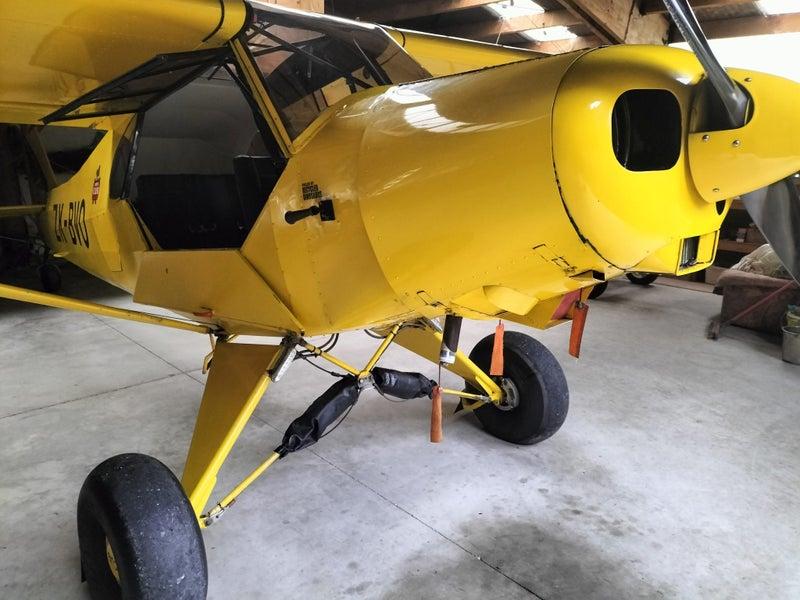
The Piper Super Cub has been the benchmark for this category for generations.
It isn’t the fastest. It isn’t the newest. And depending on the particular aircraft, it may not have the biggest useful load.
But there is something about the combination of the Super Cub’s wing, controls, visibility and low-speed handling that is incredibly difficult to beat.
It just works.
At low speed, the Super Cub is beautifully behaved. The controls communicate what the aeroplane is doing and, when properly configured and flown, it can operate in and out of some seriously small places.
There’s also the enormous modification ecosystem.
You can build a Super Cub for almost any mission imaginable.
And because so many have been used for genuine working operations around the world, there is an extraordinary amount of knowledge surrounding them.
For pure bush flying and short-field work, the Super Cub remains incredibly hard to beat.
But there are compromises.
They’re not fast. Cabin access isn’t brilliant. The cabin itself isn’t particularly wide. Depending on the aircraft and modifications, baggage can require some careful planning.
A Super Cub is an aeroplane built primarily around what happens at the beginning and end of the flight.
If that’s what matters most to you, it makes a lot of sense.

The Aviat Husky is probably the aircraft most commonly compared directly with the Super Cub.
And you can understand why.
Tandem seating. Big wing. Excellent useful load. Strong landing gear. Excellent short-field performance.
But climb into one and you’ll quickly realise that it isn’t simply a newer Super Cub.
The Husky feels like a more substantial aeroplane.
It generally offers better cruise performance, excellent load-carrying capability and a cabin that feels more suited to actually travelling somewhere.
For an owner who wants to fly a couple of hundred miles, carry gear, land somewhere interesting and then fly home again, the Husky makes a very compelling argument.
The wing is extremely capable and the aircraft can deliver impressive short-field performance in the right hands.
But there’s a catch.
The Husky deserves respect.
Particularly during landing, energy management matters. It can float if you bring excess speed across the fence, and pilots transitioning from other aircraft need to understand how to manage that wing properly.
Get it right and it’s fantastic.
Get lazy and the aeroplane will happily demonstrate why numbers in the flight manual exist.
That’s not necessarily a negative.
In fact, for the right pilot it’s part of what makes the Husky such a rewarding aircraft.
If the Super Cub is the traditional bush aircraft, the Husky is arguably the cross-country bush aircraft.
Then there’s the American Champion Scout.
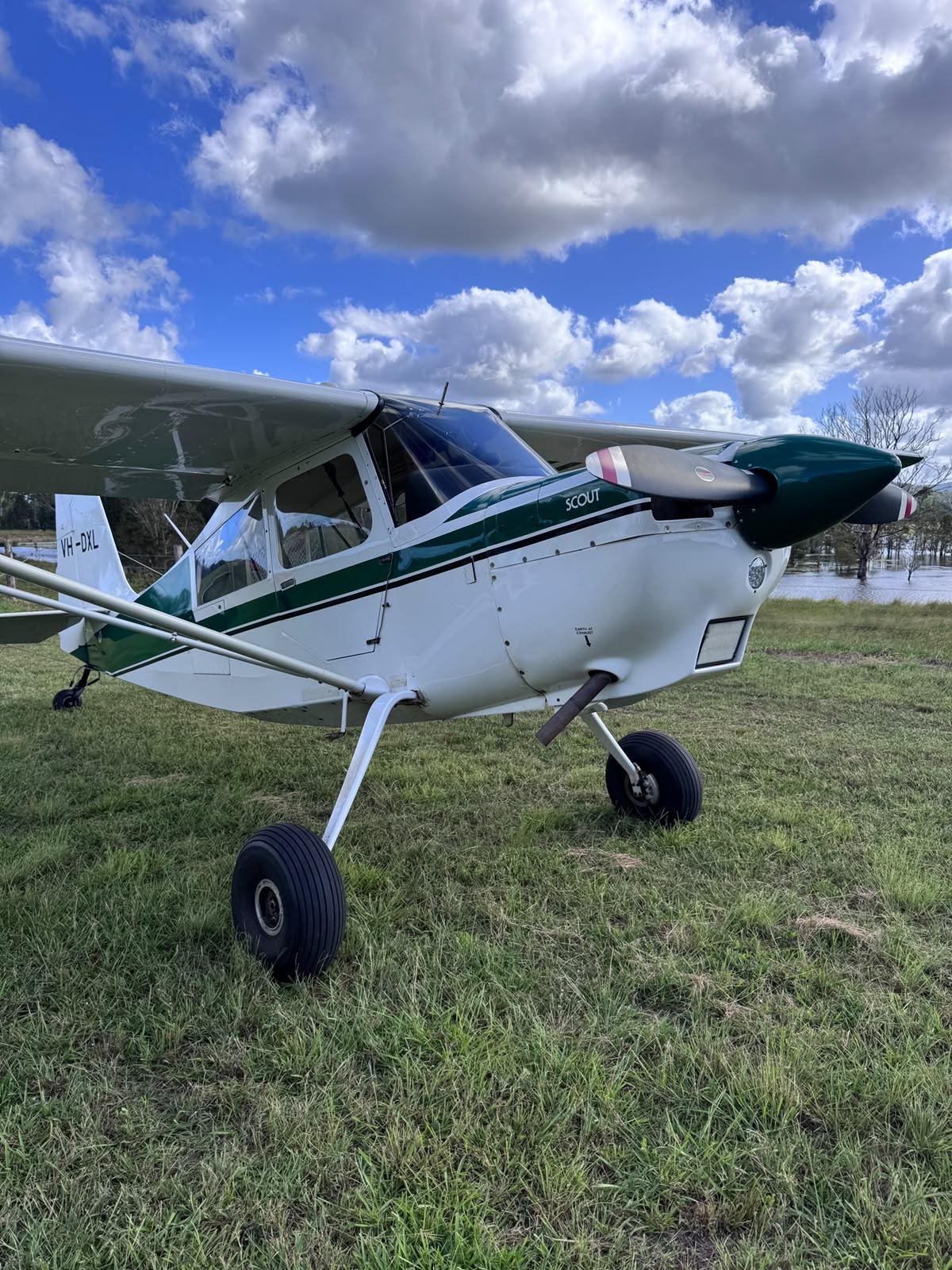
The Scout sometimes gets overlooked in this conversation, which is a shame because it might actually be the most versatile aeroplane of the three for some owners.
It comes from the Citabria and Decathlon family, and you can feel that heritage when you fly it.
The Scout is a lovely handling aeroplane.
It’s stable enough to travel in, capable in the bush and has enough performance to make it genuinely useful.
It also offers something particularly valuable: space.
For pilots who actually want to travel with camping gear, equipment and everything else that seems to find its way into a backcountry aeroplane, the Scout can be extremely practical.
It also has a more conventional feel than some highly modified bush aircraft.
That makes it an interesting proposition for someone who doesn’t necessarily want to win a STOL competition.
And still have an aeroplane that’s pleasant to fly when you’re not operating at 35 knots.
That’s where the Scout starts making a lot of sense.
That’s the wrong question.
The better question is:
What do you want the aeroplane to do?
If your priority is genuine low-speed, short-field bush flying and access to an enormous range of modifications, it’s difficult to look past the Super Cub.
If you want serious backcountry capability combined with better travelling performance and load carrying, the Husky deserves a very close look.
And if you want a capable, spacious and enjoyable all-round tailwheel aircraft that can comfortably move between touring and bush operations, the Scout might surprise you.
There is no single winner here. The better fit depends on the mission, whether that means short-field performance, travelling capability, baggage space or all-round versatility.
Comparing models only gets you so far.
Particularly with Super Cubs, two aircraft carrying exactly the same model designation can be completely different machines.
One might be relatively standard.
Another might have a larger engine, lightweight starter and alternator, extended baggage, belly pod, big tyres, upgraded suspension, leading-edge modifications and a completely different propeller.
The same applies to Huskies and Scouts.
Useful load can vary enormously depending on equipment. Performance can change significantly with propeller and tyre combinations. Even the way an aircraft feels can change depending on how it has been configured.
So don’t buy an aircraft because someone on the internet told you that Model A is better than Model B.
Work out your mission first.
Because if your Saturday morning involves loading a tent into the back, pointing the aeroplane towards somewhere without an ICAO code and coming home with mud on the tyres…
You probably aren’t going to make a bad choice with any of these three.
Super Cub, Husky or Scout: the best one is the one that suits the adventure you actually want to have.
Browse current tailwheel aircraft for sale across Australia and New Zealand, or talk to Stick ’n Rudder if you’d like help finding the right aircraft for your mission.
Super Cub, Husky, Scout or something else, we can help you narrow it down.